
NEWNow you can hearken to Fox Information articles!
New developments in artificial intelligence might use sleep information to foretell illness danger, a brand new examine suggests.
Stanford Medication researchers have developed an AI mannequin educated on almost 600,000 hours of sleep information collected from over 60,000 contributors at numerous sleep clinics.
The mannequin, known as SleepFM, reportedly can predict an individual’s danger of growing greater than 100 well being situations, in keeping with a press launch from the college.
ALZHEIMER’S RISK COULD RISE WITH COMMON CONDITION AFFECTING MILLIONS, STUDY FINDS
The researchers educated SleepFM utilizing polysomnography, a complete sleep measurement that tracks mind and coronary heart exercise in addition to respiratory, leg actions and eye actions. It’s thought-about the “gold normal” of sleep research, they famous.
“Sleep comprises much more details about future health than we presently use,” James Zou, Ph.D., affiliate professor of biomedical information science and co-senior writer of the examine, advised Fox Information Digital.
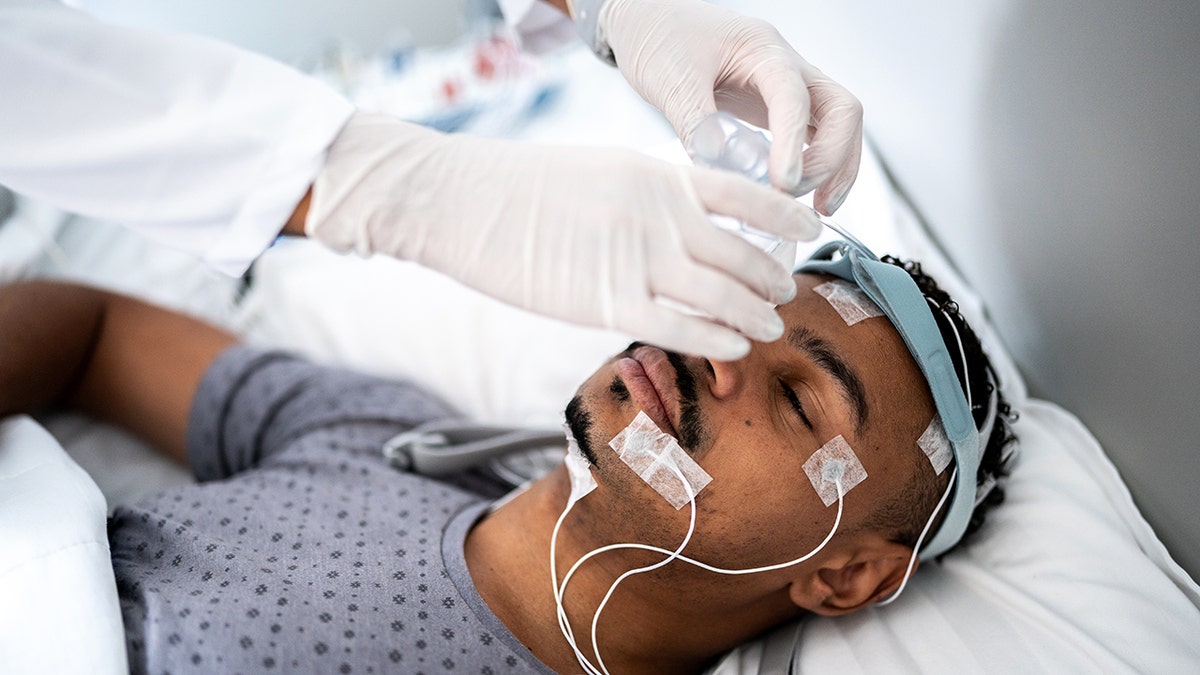
The AI mannequin (not pictured) was educated on virtually 600,000 hours of sleep information from 60,000 contributors. (iStock)
“By studying the language of sleep, our AI mannequin opens new doorways for learning the science and medication of sleep,” he added, noting that people spend about one-third of their lives sleeping.
INSUFFICIENT SLEEP LINKED TO MAJOR HIDDEN HEALTH RISK, STUDY REVEALS
Within the examine, the workforce paired the sleep information with the contributors’ electronic health records, which offered as much as 25 years of knowledge.
The mannequin analyzed 1,000 illness classes in these well being data and found 130 ailments that it might predict with “cheap accuracy,” in keeping with the discharge.
CLICK HERE TO DOWNLOAD THE FOX NEWS APP
“By analyzing a single night time of sleep with highly effective AI, we discovered that patterns in sleep can predict the danger of over 100 completely different ailments years earlier than prognosis,” Zou stated.

People spend about one-third of their lives sleeping, in keeping with the researchers, making sleep a wealthy supply of knowledge. (iStock)
These included dementia, heart disease, stroke, kidney illness and even total mortality. The mannequin’s predictions have been notably robust for cancers, being pregnant issues, circulatory situations and psychological issues, the researchers famous.
CLICK HERE FOR MORE HEALTH STORIES
“It doesn’t clarify that to us in English,” Zou famous. “However now we have developed completely different interpretation methods to determine what the mannequin is taking a look at when it’s making a particular illness prediction.”
The findings from the examine, which was partly funded by the Nationwide Institutes of Well being, have been printed within the journal Nature Medication.
Limitations and caveats
Dr. Harvey Castro, a board-certified emergency medicine physician and nationwide speaker on synthetic intelligence based mostly in Dallas, commented on Stanford’s AI sleep software in a press release to Fox Information Digital.
“A major sign doesn’t equal prepared medication,” stated Castro, who was not concerned within the examine. “SleepFM is a breakthrough, not but a bedside software.”
“Rating danger isn’t the identical as predicting outcomes.”
The skilled additionally emphasised that whereas the software ranks danger, it may well’t essentially predict that illness will happen. “Rating danger isn’t the identical as predicting outcomes, and sufferers dwell in outcomes,” he stated.
Earlier than the software can be utilized in “actual life,” it should be confirmed to work exterior the lab, in keeping with Castro.
CLICK HERE TO SIGN UP FOR OUR HEALTH NEWSLETTER
The Stanford researchers additionally acknowledged that the examine had some limitations.
“There’s nonetheless a lot that we do not perceive … Most evaluation focuses on slender duties like sleep staging and apnea detection,” Zou famous.
The workforce cautioned that this can be a analysis undertaking and never meant to offer particular medical recommendation apart from that “sleep is essential.”
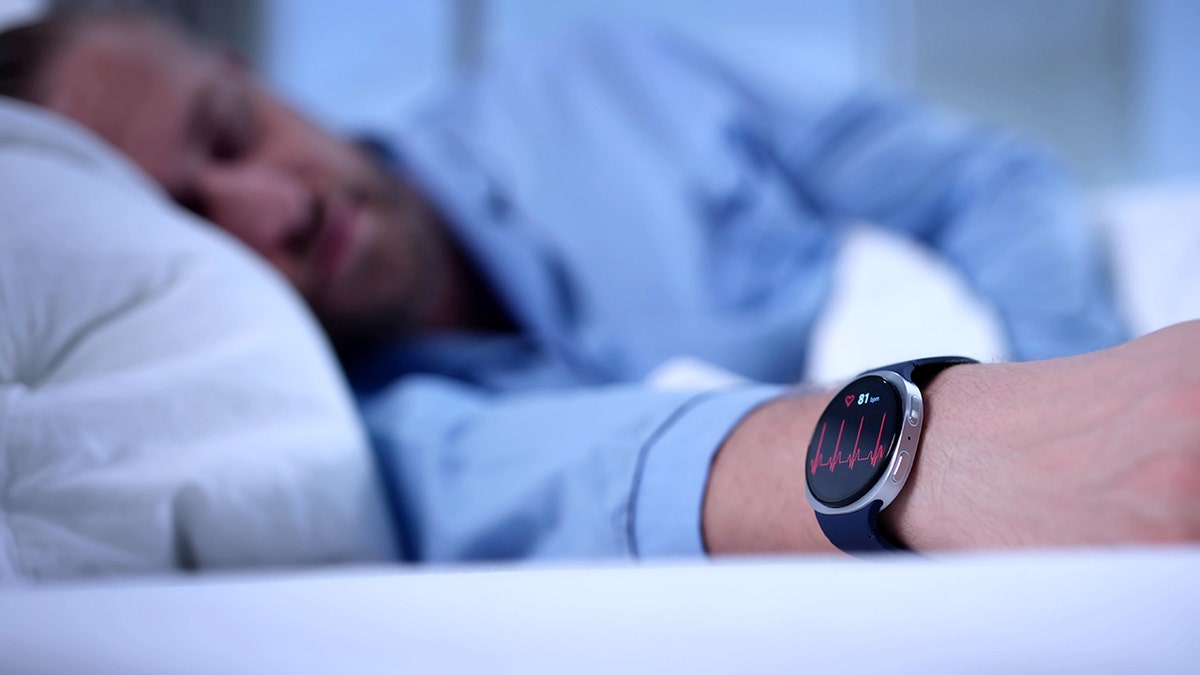
The workforce hopes to create wearable gadgets that enable particular person, informal use of the expertise. (iStock)
Different limitations embody the truth that the workforce used “multi-modal sleep recordings” that retrieve very robust indicators from the mind, coronary heart and respiratory system.
The researchers hope to increase the analysis to gather information from sufferers utilizing wearable gadgets, which might assist pinpoint precisely what the mannequin is decoding.
TEST YOURSELF WITH OUR LATEST LIFESTYLE QUIZ
For now, the expertise is barely being examined in analysis settings and isn’t accessible to customers.