
NEWNow you can take heed to Fox Information articles!
A easy blood check may predict not solely an individual’s threat of creating Alzheimer’s disease, but additionally the 12 months signs will start.
Researchers on the Washington College College of Medication in St. Louis got down to decide if ranges of a particular protein within the blood may very well be used as a “organic clock” to foretell when indicators of the illness will emerge.
The precise protein, often known as p-tau217, types “tangles” within the mind that disrupt communication between nerve cells. In a wholesome mind, tau helps to stabilize the construction of nerve cells.
HIDDEN BRAIN CONDITION MAY QUADRUPLE DEMENTIA RISK IN OLDER ADULTS, STUDY SUGGESTS
In some instances, brain scans can be utilized to detect these tangles when diagnosing Alzheimer’s. Preliminary research have instructed that the identical technique may very well be used to find out a development timeline.
As these imaging exams are sometimes advanced and costly, the analysis group needed to discover whether or not a blood check may monitor the identical proteins and produce related outcomes.

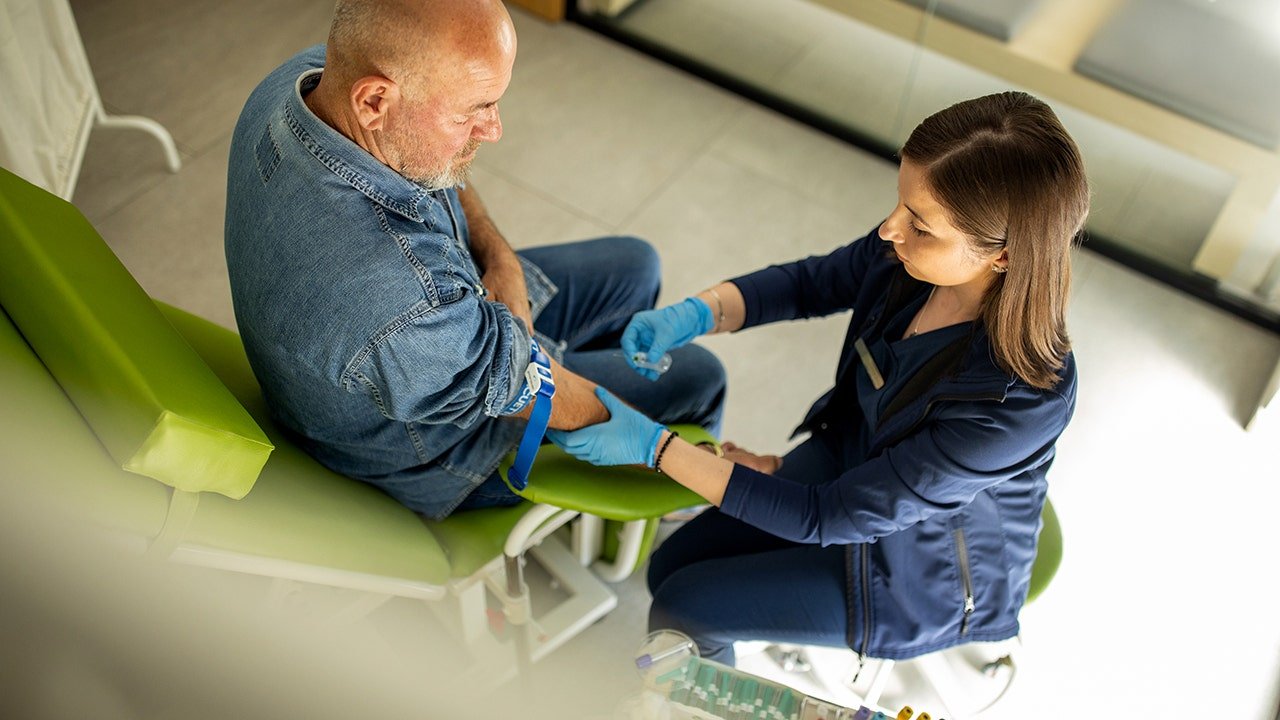
By evaluating blood samples with contributors’ cognitive efficiency over a number of years, the group discovered that p-tau217 ranges rise in a “remarkably constant” sample lengthy earlier than reminiscence loss begins. (iStock)
The examine, printed within the journal Nature Medication, analyzed knowledge from greater than 600 older adults enrolled in two long-term Alzheimer’s analysis initiatives.
ALZHEIMER’S RISK TIED TO HOW THE BODY HANDLES SUGAR AFTER EATING, STUDY FINDS
By evaluating blood samples with contributors’ cognitive efficiency over a number of years, the group discovered that p-tau217 ranges rise in a “remarkably constant” sample lengthy earlier than reminiscence loss begins, in line with a press launch.
The group then created a mannequin that makes use of a affected person’s age and protein ranges to estimate when signs will seem, with a margin of error of three to 4 years.
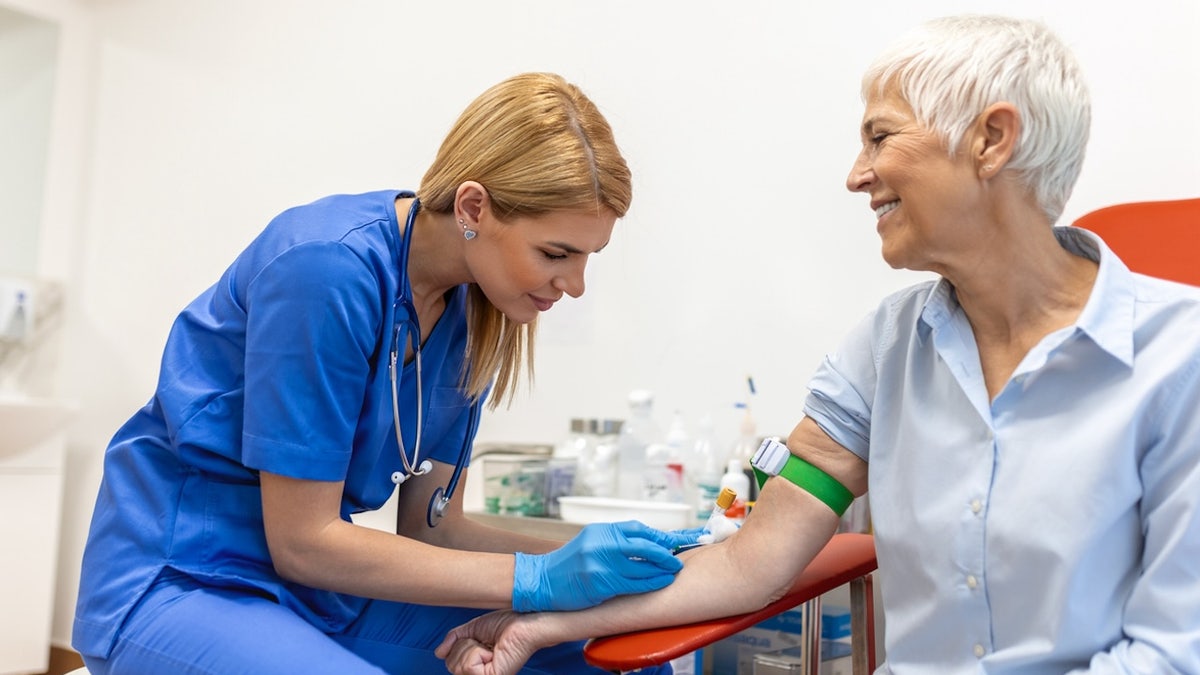
The group created a mannequin that makes use of a affected person’s age and protein ranges to estimate when signs will seem, with a margin of error of three to 4 years. (iStock)
“We present {that a} single blood check measuring p-tau217 can present a tough estimate of when a person is prone to develop signs of Alzheimer’s illness,” lead writer Kellen Ok. Petersen, PhD, teacher of neurology at Washington College in St. Louis, informed Fox Information Digital.
The researchers discovered that older adults developed symptoms rather more quickly after p-tau217 grew to become irregular, he famous.
LOWER DEMENTIA RISK LINKED TO ROUTINE VACCINATION IN MAJOR NEW ANALYSIS
“For instance, individuals who first had irregular p-tau217 ranges round age 60 didn’t develop Alzheimer’s signs for about 20 years, whereas those that first had irregular p-tau217 ranges round age 80 developed signs after solely about 10 years,” Petersen stated.
This implies that age and disease-related adjustments within the mind can affect how shortly Alzheimer’s signs change into obvious, the researcher concluded.
“At this level, we don’t suggest that any cognitively unimpaired people have any Alzheimer’s illness biomarker check.”
“This might remodel how researchers design scientific trials and, ultimately, how clinicians establish folks at highest threat for cognitive decline related to Alzheimer’s years earlier than decline begins,” Chicago-based Rebecca M. Edelmayer, PhD, vice chairman of scientific engagement on the Alzheimer’s Affiliation, informed Fox Information Digital.
“A blood check is usually a lot cheaper and simpler to manage than a mind scan or spinal‑fluid check. Sooner or later, it may assist docs and researchers establish individuals who might profit from early treatments,” added Edelmayer, who was not concerned within the examine.
CLICK HERE TO SIGN UP FOR OUR HEALTH NEWSLETTER
The examine did have some limitations and caveats.
“We have been solely capable of make predictions for people whose p-tau217 ranges fell inside a sure vary, though it was a reasonably wide selection,” Petersen shared. “The fashions have been developed in relatively healthy and well-educated analysis cohorts that weren’t various, so the outcomes might not apply effectively to the broader inhabitants.”

The analysis means that age and disease-related adjustments within the mind can affect how shortly Alzheimer’s signs change into obvious. (iStock)
Whereas the researchers referenced in-home blood exams in this study, they cautioned towards folks in search of out and taking these exams themselves.
CLICK HERE FOR MORE HEALTH STORIES
“At this level, we don’t suggest that any cognitively unimpaired people have any Alzheimer’s disease biomarker check,” Dr. Suzanne Schindler, a neurologist at Washington College who was a co-author of the examine, stated within the press launch.
Peterson acknowledged that these outcomes are nonetheless experimental and ripe for enchancment.
CLICK HERE TO DOWNLOAD THE FOX NEWS APP
“The present estimate isn’t but correct sufficient for clinical use or private medical decision-making, however we count on that it will likely be attainable to create extra correct fashions,” he informed Fox Information Digital.
Wanting forward, the group hopes to refine the check by researching different Alzheimer’s-linked proteins to slender the margin of error, Schindler stated. Extra various contributors are additionally wanted to substantiate the outcomes.
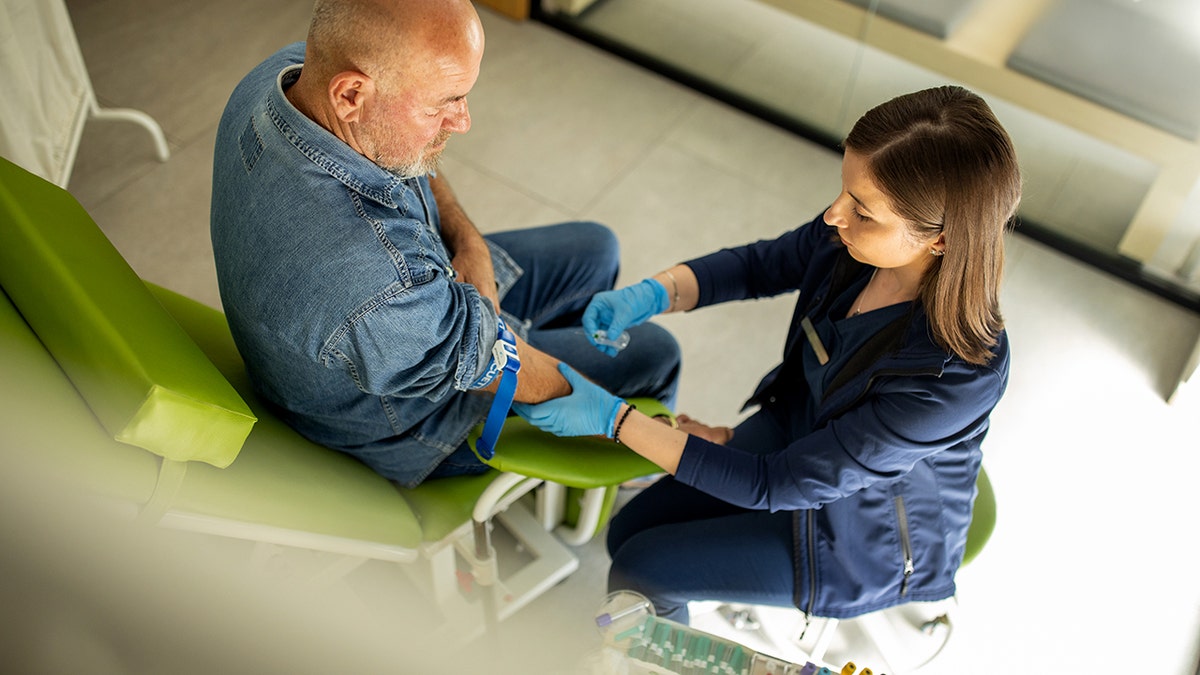
Two giant scientific trials are in progress to find out whether or not folks with excessive ranges of the protein can profit from remedy. (iStock)
Two giant scientific trials are actually in progress, aiming to find out whether or not folks with excessive ranges of this protein can profit from remedy with considered one of two Alzheimer’s drugs earlier than signs seem.
Lecanemab and donanemab are the one accepted medicine designed to cut back ranges of plaques within the mind related to Alzheimer’s illness. Researchers hope that treating folks earlier might increase the medicine’ effectiveness.
TEST YOURSELF WITH OUR LATEST LIFESTYLE QUIZ
“There are a lot of different blood and imaging biomarkers, in addition to cognitive exams, that we are able to mix with plasma p-tau217 to enhance the accuracy of predicting symptom onset,” Petersen stated. “We hope this work will result in even higher fashions that will probably be helpful to people.”