

NEWNow you can take heed to Fox Information articles!
Lengthy earlier than the Black Loss of life killed hundreds of thousands throughout Europe within the Center Ages, an earlier, extra elusive model of the plague unfold throughout a lot of Eurasia.
For years, scientists had been uncertain how the traditional illness managed to unfold so broadly in the course of the Bronze Age, which lasted from roughly 3300 to 1200 B.C., and stick round for practically 2,000 years, particularly because it wasn’t unfold by fleas like later plagues. Now, researchers say a stunning clue could assist clarify it, a domesticated sheep that lived greater than 4,000 years in the past.
Researchers discovered DNA from the plague bacterium Yersinia pestis within the tooth of a Bronze Age sheep found in what’s now southern Russia, based on a research just lately printed within the journal Cell. It’s the first recognized proof that the traditional plague contaminated animals, not simply individuals, and affords a lacking clue about how the illness unfold.
SCIENTISTS CRACK THE CODE ON NEW VACCINE FOR DEADLY PLAGUE BACTERIA
“It was alarm bells for my staff,” research co-author Taylor Hermes, a College of Arkansas archaeologist who research historic livestock and illness unfold, stated in a statement. “This was the primary time we had recovered the genome from Yersinia pestis in a non-human pattern.”
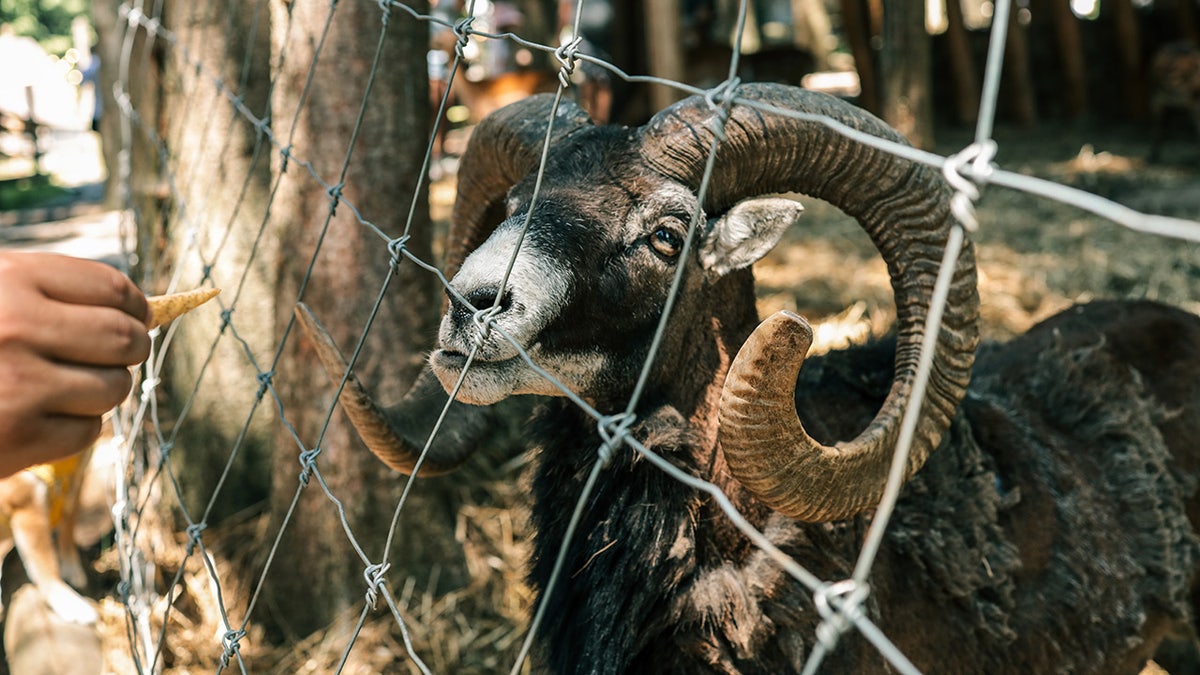
A domesticated sheep, possible much like this one, lived alongside people in the course of the Bronze Age. (iStock)
And it was a fortunate discovery, based on the researchers.
“After we take a look at livestock DNA in historic samples, we get a fancy genetic soup of contamination,” Hermes stated. “This can be a massive barrier … nevertheless it additionally provides us a chance to search for pathogens that contaminated herds and their handlers.”
DEADLY BACTERIA THAT DOOMED NAPOLEON’S ARMY DISCOVERED 213 YEARS AFTER RUSSIAN RETREAT
The extremely technical and time-consuming work requires researchers to separate tiny, broken fragments of historic DNA from contamination left by soil, microbes and even fashionable people. The DNA they get well from historic animals is usually damaged into tiny items typically simply 50 “letters” lengthy, in comparison with a full human DNA strand, which comprises greater than 3 billion of these letters.
Animal stays are particularly robust to review as a result of they’re typically poorly preserved in comparison with human stays that had been fastidiously buried, the researchers famous.
CLICK HERE TO SIGN UP FOR OUR LIFESTYLE NEWSLETTER
The discovering sheds mild on how the plague possible unfold via shut contact between individuals, livestock and wild animals as Bronze Age societies started maintaining bigger herds and touring farther with horses. The Bronze Age noticed extra widespread use of bronze instruments, large-scale animal herding and elevated journey, circumstances that will have made it simpler for ailments to maneuver between animals and humans.
When the plague returned within the Center Ages in the course of the 1300s, referred to as the Black Loss of life, it killed an estimated one-third of Europe’s inhabitants.

The invention was made at Arkaim, a fortified Bronze Age settlement within the Southern Ural Mountains of present-day Russia close to the Kazakhstan border. (iStock)
“It needed to be greater than individuals shifting,” Hermes stated. “Our plague sheep gave us a breakthrough. We now see it as a dynamic between individuals, livestock and a few nonetheless unidentified ‘pure reservoir’ for it.”
CLICK HERE FOR MORE LIFESTYLE STORIES
Researchers imagine sheep possible picked up the micro organism from one other animal, like rodents or migratory birds, that carried it with out getting sick after which handed it to people. They are saying the findings spotlight what number of lethal ailments start in animals and soar to people, a threat that continues as we speak as individuals transfer into new environments and work together extra carefully with wildlife and livestock.
“It is necessary to have a larger respect for the forces of nature,” Hermes stated.
The research relies on a single historic sheep genome, which limits how a lot scientists can conclude, they famous, and extra samples are wanted to completely perceive the unfold.
TEST YOURSELF WITH OUR LATEST LIFESTYLE QUIZ
The researchers plan to review extra historic human and animal stays from the region to find out how widespread the plague was and which species could have performed a task in spreading it.

Researchers (not pictured) discovered plague-causing Yersinia pestis DNA within the stays of a Bronze Age sheep. (iStock)
Additionally they hope to determine the wild animal that initially carried the micro organism and higher perceive how human motion and livestock herding helped the illness journey throughout huge distances, insights that might assist them higher anticipate how animal-borne diseases proceed to emerge.
CLICK HERE TO DOWNLOAD THE FOX NEWS APP
The analysis was led by scientists on the Max Planck Institute for An infection Biology, with senior authors Felix M. Key of the Max Planck Institute for An infection Biology and Christina Warinner of Harvard College and the Max Planck Institute for Geoanthropology.
The analysis was supported by the Max Planck Society, which has additionally funded follow-up work within the area.