
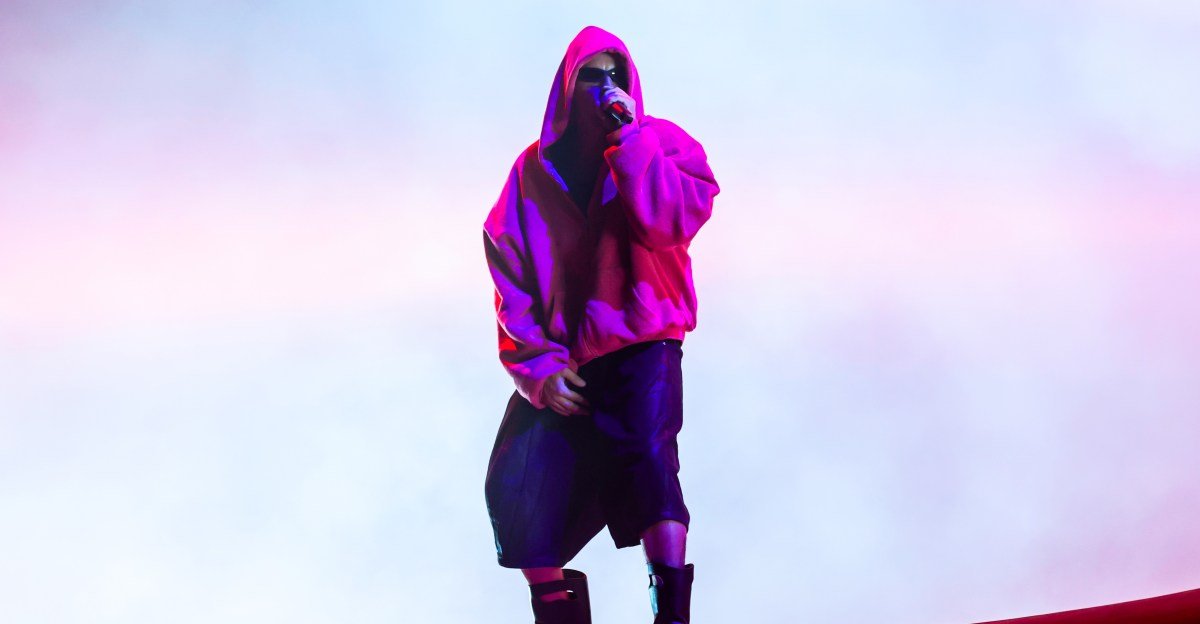
This previous Saturday on the Coachella music competition, Justin Bieber performed the primary of two headlining units in a deal reportedly worth $10 million. It was his most important solo efficiency in years. However Bieber spent a few of his time on stage the way in which many people do on Saturday nights: on YouTube. For a few of the set, Bieber performed elements of his older songs proper off YouTube from a Mac laptop computer. Behind him, on the stage’s display, you would see YouTube’s web site as he looked for songs in actual time after which put the movies on full-screen whereas he sang alongside on stage.
“I’m sorry to chop it, however these are little snippets. I simply wish to see how far again you go,” he tells the group at one level. This a part of the setlist included early songs like “Child,” “Favourite Lady,” “That Ought to Be Me,” “Magnificence and a Beat,” and “By no means Say By no means.” Bieber, who was discovered thanks to YouTube, even confirmed two covers of him as a younger child singing the songs.
For longtime Bieber followers, the clips have been most likely a enjoyable journey down reminiscence lane. However in keeping with the Daily Mail, “the actual purpose Justin couldn’t play his outdated music in full has now been revealed, as he offered his total music catalogue again in December 2022,” speculating that the sale “might be why he closely targeted on his new music.” (Bieber’s catalog sale to Hipgnosis Music Administration, which has since rebranded to Recognition Music Group, was introduced in 2023).
Nonetheless, primarily based on what consultants inform The Verge, that isn’t the case.
“The Each day Mail is fallacious about that,” Daniel J. Schacht, an IP, music, and leisure legal professional, tells The Verge. “The sale of his music catalog didn’t forestall Bieber from performing his songs.”
“That’s not how this works,” says James Grimmelmann, a professor of digital and knowledge legislation at Cornell Tech and Cornell Regulation Faculty. “That’s not how any of it really works.”
When Bieber offered his again catalog, Recognition took over publishing copyrights and grasp recordings, according to The Hollywood Reporter. However Grimmelmann explains that the “related copyright right here is the general public efficiency proper within the songs.” These rights are administered by efficiency rights organizations (PRO), and venues like Coachella will enter into agreements to license a whole repertory from the organizations in order that “performers can then carry out any tune from the catalog.” Whereas Recognition Music Group might now maintain the best to get royalties from these licenses, Bieber “by no means wanted to personal these rights to have the ability to carry out them in any state of affairs coated by PRO licenses.”
In principle, maybe, Bieber and Recognition may have particularly negotiated that he can’t carry out his outdated songs. Schacht, nonetheless, notes that “a catalog sale that restricts an artist’s proper to carry out music could be unprecedented, and the phrase is that there isn’t a such restriction in Bieber’s deal.” He additionally factors out a extra sensible consideration: “why would the brand new proprietor wish to cease consideration being paid to the unique movies and recordings? This looks as if a web optimistic for them, together with elevated streams of the unique works.”
A supply conversant in the catalog sale additionally told Billboard that the declare was “nonsense,” saying that “There are not any restrictions on what he can or can’t do in reside efficiency.”
It wasn’t simply songs that Bieber performed off YouTube, by the way in which: he and everybody at Coachella additionally watched a clip of a young Bieber walking into a glass door, one where he falls off a stage, a recently-infamous clip the place he scolds a paparazzi for not “clocking” that he’s “standing on enterprise”, the Deez Nuts video, and the double rainbow video.
“Alright, I’m getting pulled into the deep darkish internet,” he stated partway by the double rainbow video, getting up from his seat. “We gotta preserve this present going, man. Let’s do that.”