
NEWNow you can hearken to Fox Information articles!
Researchers in Israel have found a distinction in muscle construction in these with obstructive sleep apnea (OSA).
Based on a brand new examine revealed within the journal Sleep and Respiration, individuals with OSA are likely to have the next muscle mass index, reflecting better space relative to top, in addition to decrease density.
This implies individuals with OSA might appear like they’ve extra muscle, however that muscle tends to be much less dense and probably much less purposeful.
POPULAR SLEEP POSITIONS COULD BE DAMAGING YOUR NERVES, ACCORDING TO EXPERTS
The researchers gathered knowledge from 209 adults in an in a single day sleep examine who underwent chest or belly CT scans, in response to a press launch.
In contrast with a management group, the researchers discovered that folks with OSA have been older, extra typically male and heavier on common. They have been additionally extra more likely to have hypertension, cardiovascular disease and poorer oxygen ranges throughout sleep.

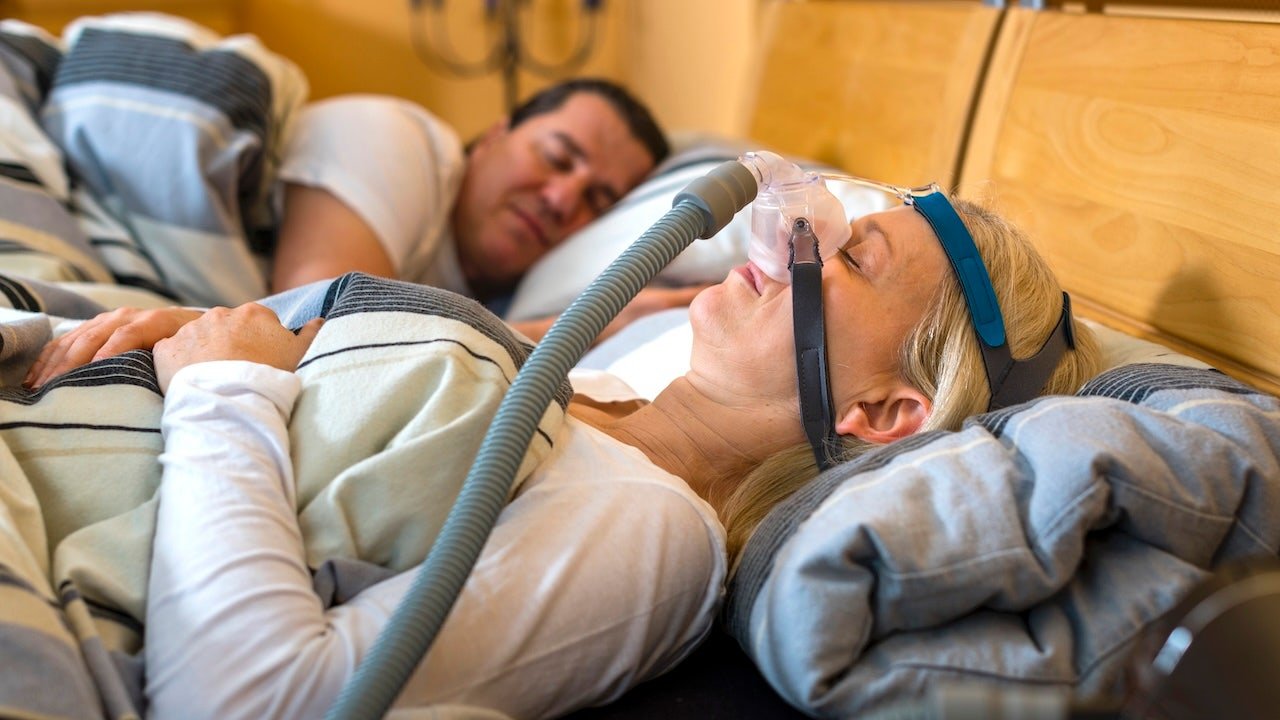
Folks with sleep apnea had the next muscle mass index, but the standard of that muscle was decreased. (iStock)
The findings confirmed a big hyperlink between OSA and better muscle mass index. Nevertheless, decrease muscle density was extra strongly related to age and weight than with OSA.
Worse sleep apnea severity was linked with decrease skeletal muscle density (SMD) and better skeletal muscle index (SMI), indicating bigger however much less dense muscle.
SIMPLE NIGHTLY HABIT LINKED TO HEALTHIER BLOOD PRESSURE, STUDY SUGGESTS
Higher BMI was strongly linked with decrease SMD and better SMI, whereas older age was strongly linked with decrease SMD.
People over 60 years previous and people with a BMI over 30 had a lot stronger hyperlinks to decrease muscle density than OSA alone, in response to the analysis.
“These findings spotlight that OSA is rather more than a nighttime respiratory dysfunction.”
Dr. Wendy Troxel, a Utah-based licensed scientific psychologist and senior behavioral scientist at RAND, simplified the primary examine findings in an interview with Fox Information Digital.
“People with OSA might have extra muscle mass, however that muscle could also be less healthy as a result of it incorporates extra fats, which may impair energy and metabolic operate,” mentioned Troxel, who was not concerned within the examine.
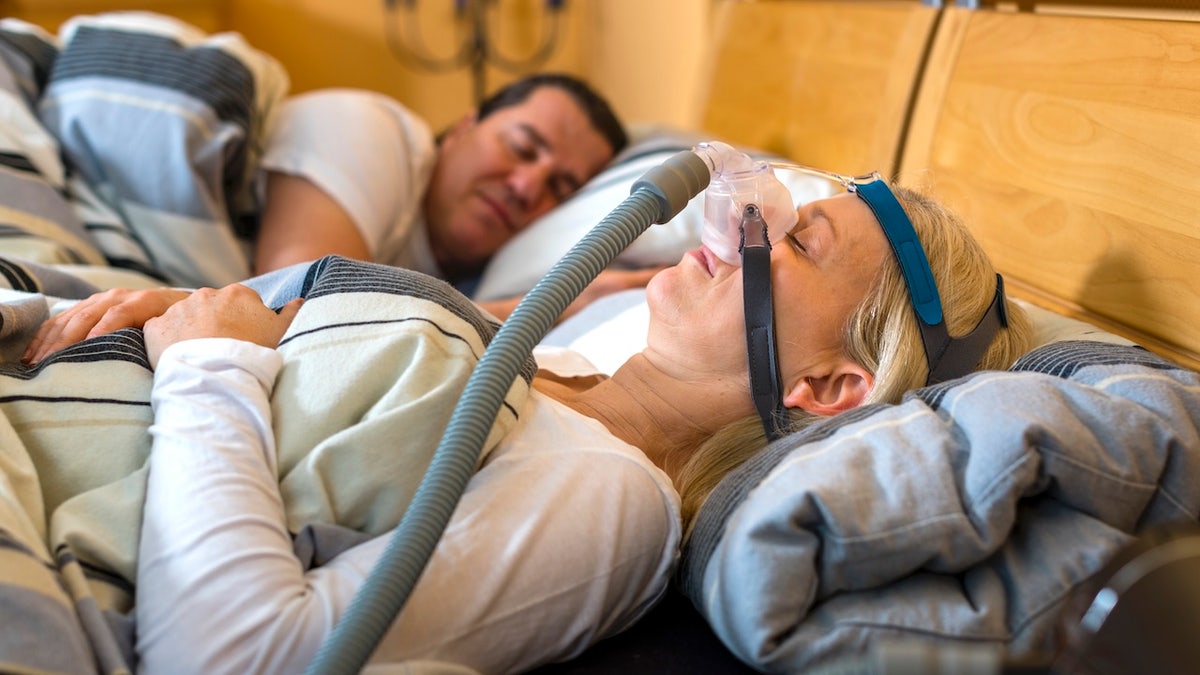
People over 60 years previous and people with a BMI over 30 had a lot stronger hyperlinks to decrease muscle density than OSA alone. (iStock)
“This sample overlaps with sarcopenia, a clinical condition the place muscle turns into weaker and fewer environment friendly, even when muscle measurement doesn’t dramatically decline.”
Troxel identified an “vital” affiliation between OSA severity and muscle high quality, which was “modest in comparison with identified danger elements, together with age and physique mass.”
SLEEP PATTERNS COULD PREDICT RISK FOR DEMENTIA, CANCER AND STROKE, STUDY SUGGESTS
“[This indicates] that OSA could also be one marker inside a broader profile of metabolic danger,” she mentioned.
“Clinically, these findings spotlight that OSA is rather more than a nighttime breathing disorder. It might sign underlying metabolic dysfunction affecting a number of methods, together with muscle well being.”
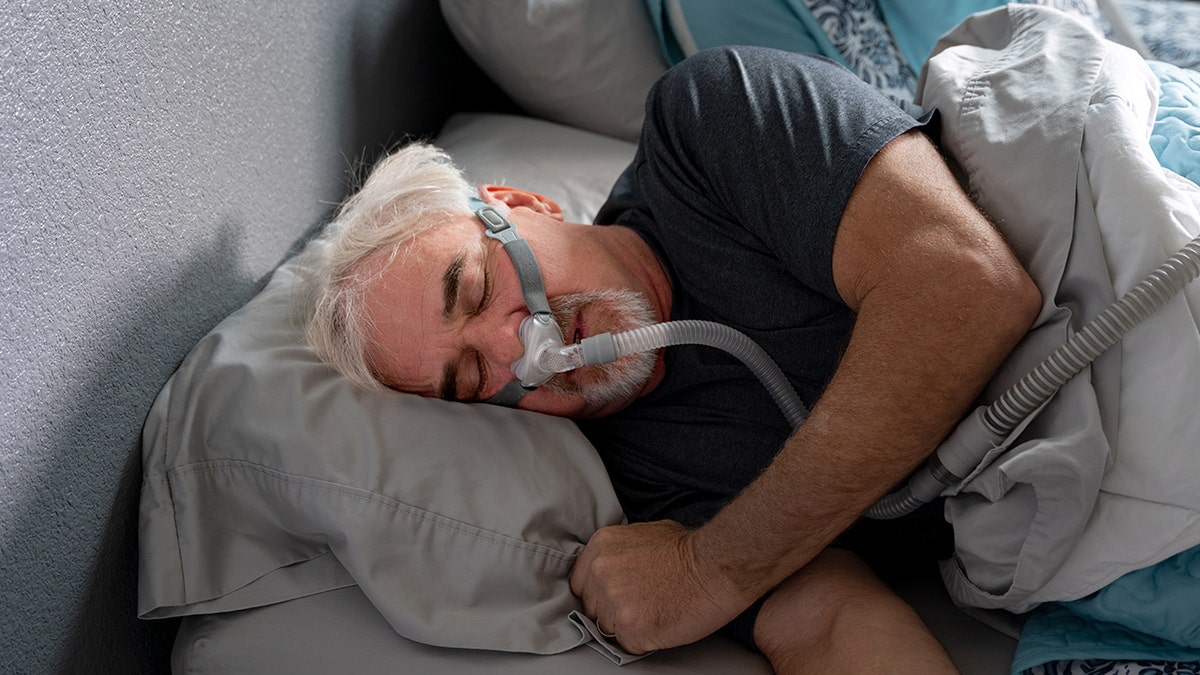
“These findings spotlight that OSA is rather more than a nighttime respiratory dysfunction,” a sleep professional commented. (iStock)
In an interview with Fox Information Digital, examine co-author Ariel Tarasiuk, professor on the division of physiology and cell biology at Israel’s Ben-Gurion College of the Negev, shared his ideas on the “paradoxical” findings.
“Age and obesity appeared to have a stronger affect on muscle well being than sleep apnea itself,” he mentioned. “This implies that whereas sleep apnea might play a job, it’s unlikely to be the first issue driving these adjustments.”
CLICK HERE TO SIGN UP FOR OUR HEALTH NEWSLETTER
Sufferers ought to be conscious that sleep apnea is not only about loud night breathing or poor sleep, Tarasiuk mentioned, as it could possibly have an effect on total well being, together with muscle operate.
“Getting correctly identified and handled issues,” he mentioned. “CPAP remedy could make an actual distinction in enhancing respiratory and sleep high quality, nevertheless it’s solely a part of the image.”
CLICK HERE FOR MORE HEALTH STORIES
“Sustaining a wholesome weight and staying physically active are equally vital for muscle well being and for decreasing the severity of sleep apnea,” he went on. “In brief, treating sleep apnea is about defending long-term well being, not simply getting a greater evening’s sleep.”

Preserving a wholesome weight and staying energetic is vital in decreasing the severity of sleep apnea, in response to the researchers. (iStock)
Tarasiuk reminded clinicians that bigger muscle tissue don’t all the time imply more healthy, as some muscle tissue could also be infiltrated with fats, which can cut back their energy and efficiency.
“This highlights the significance of trying past muscle measurement alone,” he mentioned. “Routine imaging, akin to CT scans carried out for different causes, can typically present further perception into muscle high quality.”
CLICK HERE TO DOWNLOAD THE FOX NEWS APP
“General, the findings level towards a extra holistic method: treating the airway whereas additionally specializing in weight, physical activity and metabolic well being.”
“CPAP remedy could make an actual distinction in enhancing respiratory and sleep high quality, nevertheless it’s solely a part of the image.”
The examine findings might not apply to all populations, because it was performed at a single middle, in response to Tarasiuk.
The researchers additionally didn’t have entry to info on life-style elements like bodily exercise, weight loss program, smoking or alcohol use, elements that may affect muscle well being.
TEST YOURSELF WITH OUR LATEST LIFESTYLE QUIZ
“Trying forward, bigger research throughout a number of facilities will assist verify these findings and supply a broader image,” Tarasiuk added.
“Future analysis will even focus extra on outcomes that matter in actual life, akin to how sufferers reply to therapies like CPAP, and on understanding how muscle adjustments develop over time in individuals with sleep apnea.”